
Last updated November 22, 2026
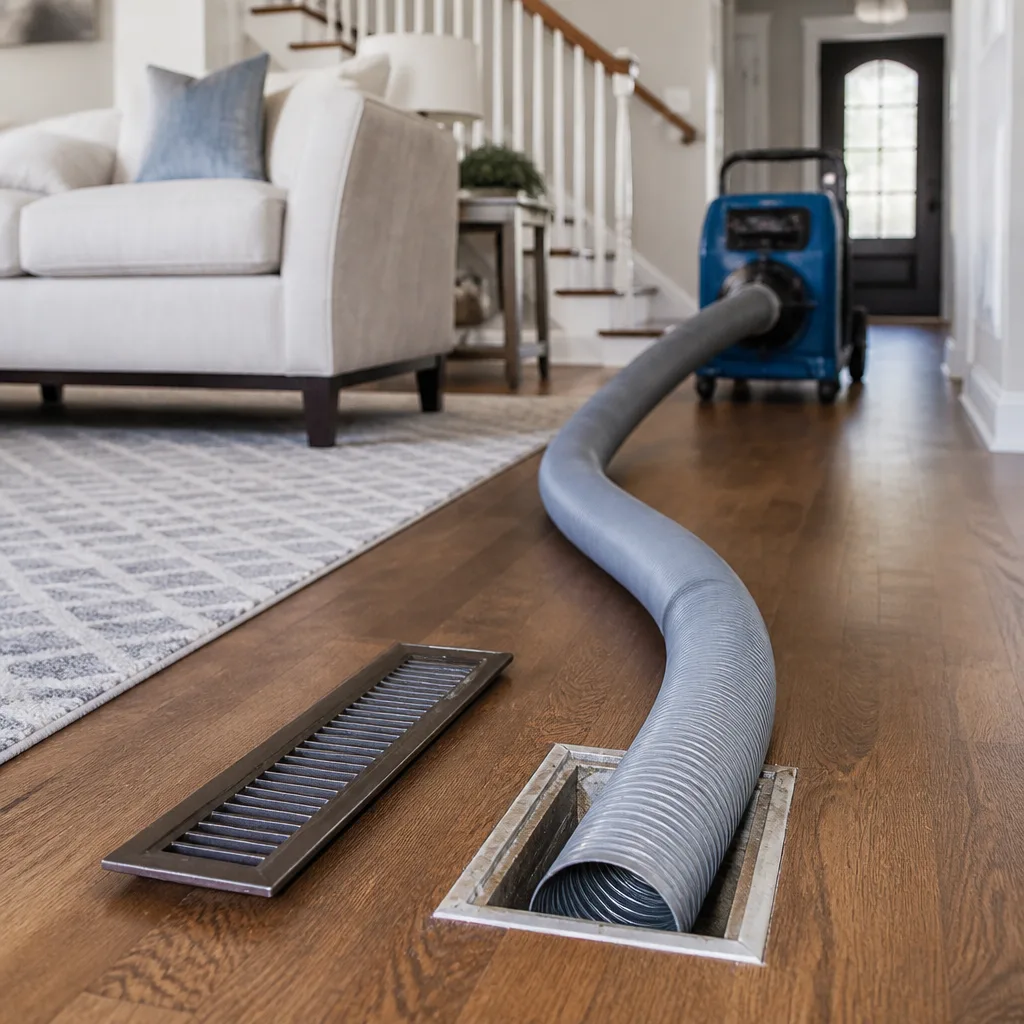 Whole-home duct cleaning
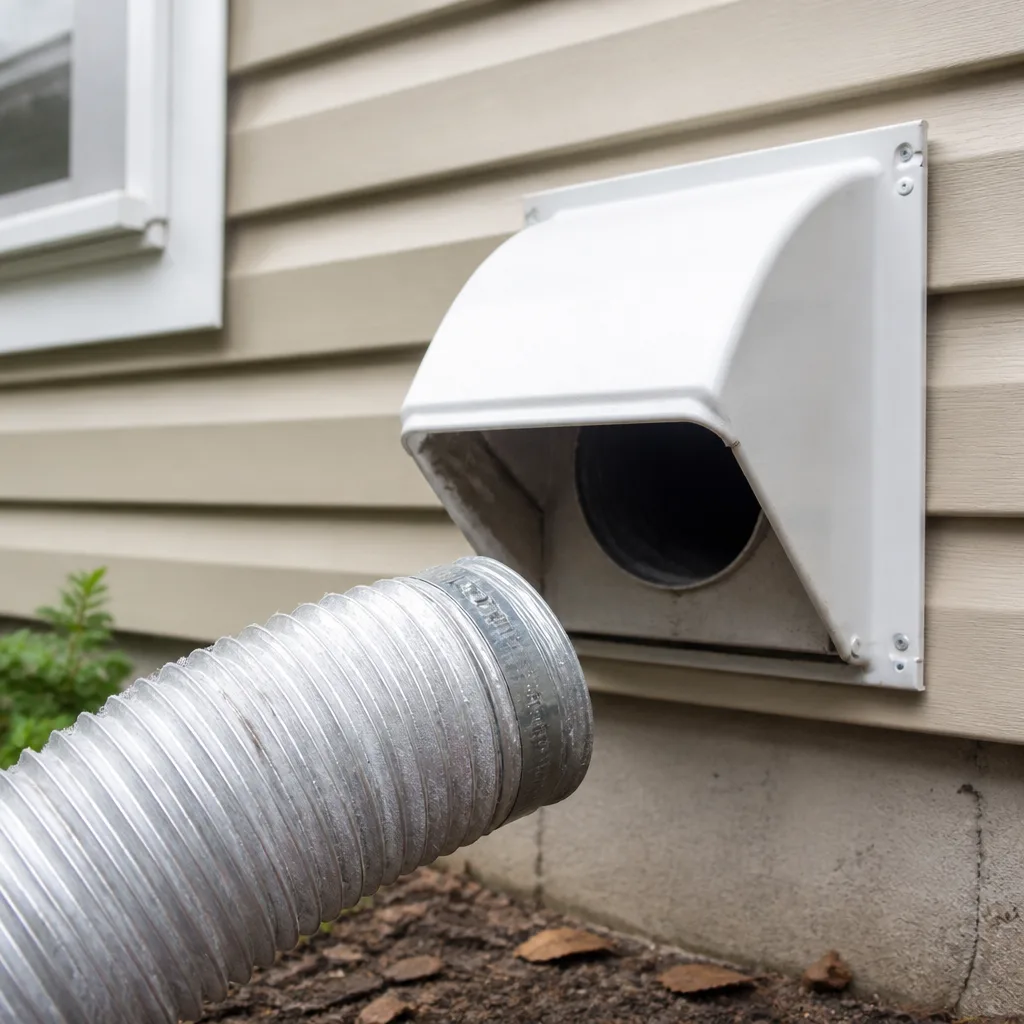 Dryer vent cleaning
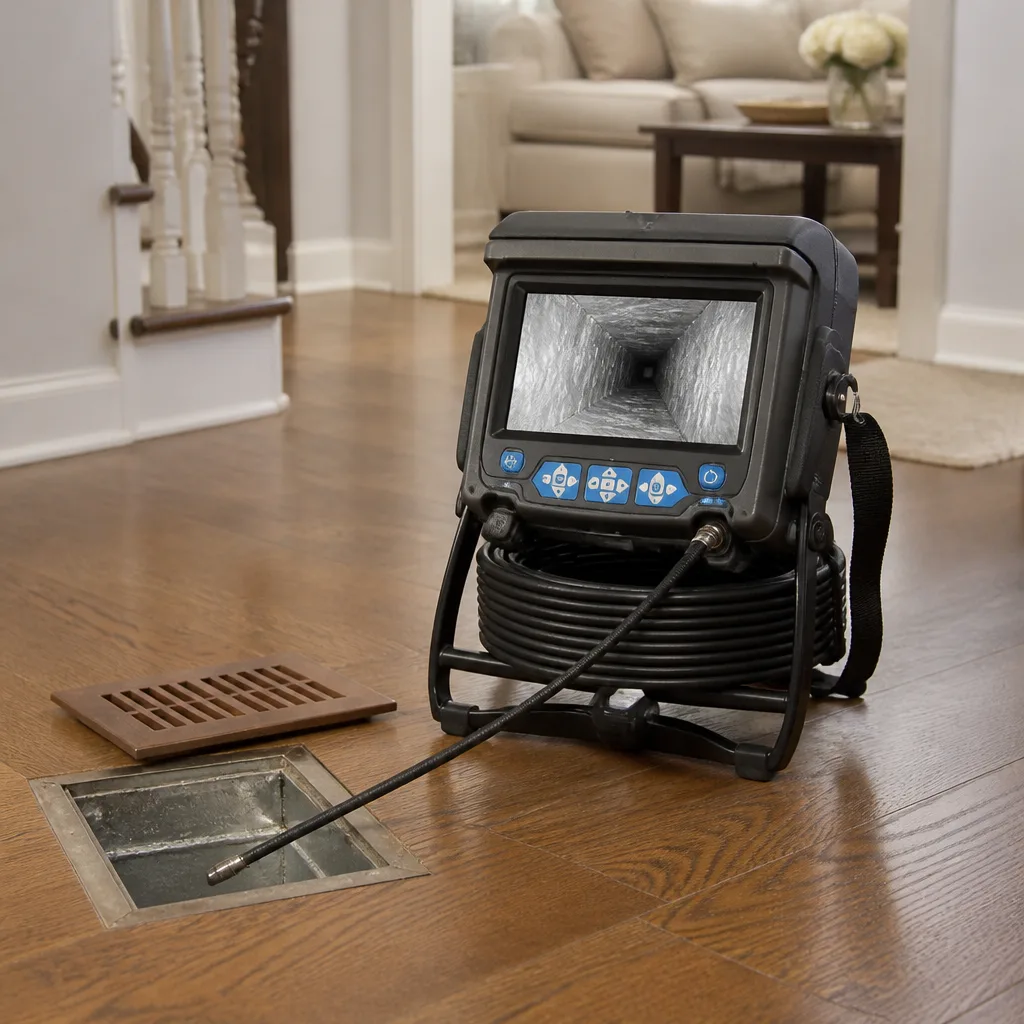 Camera inspection
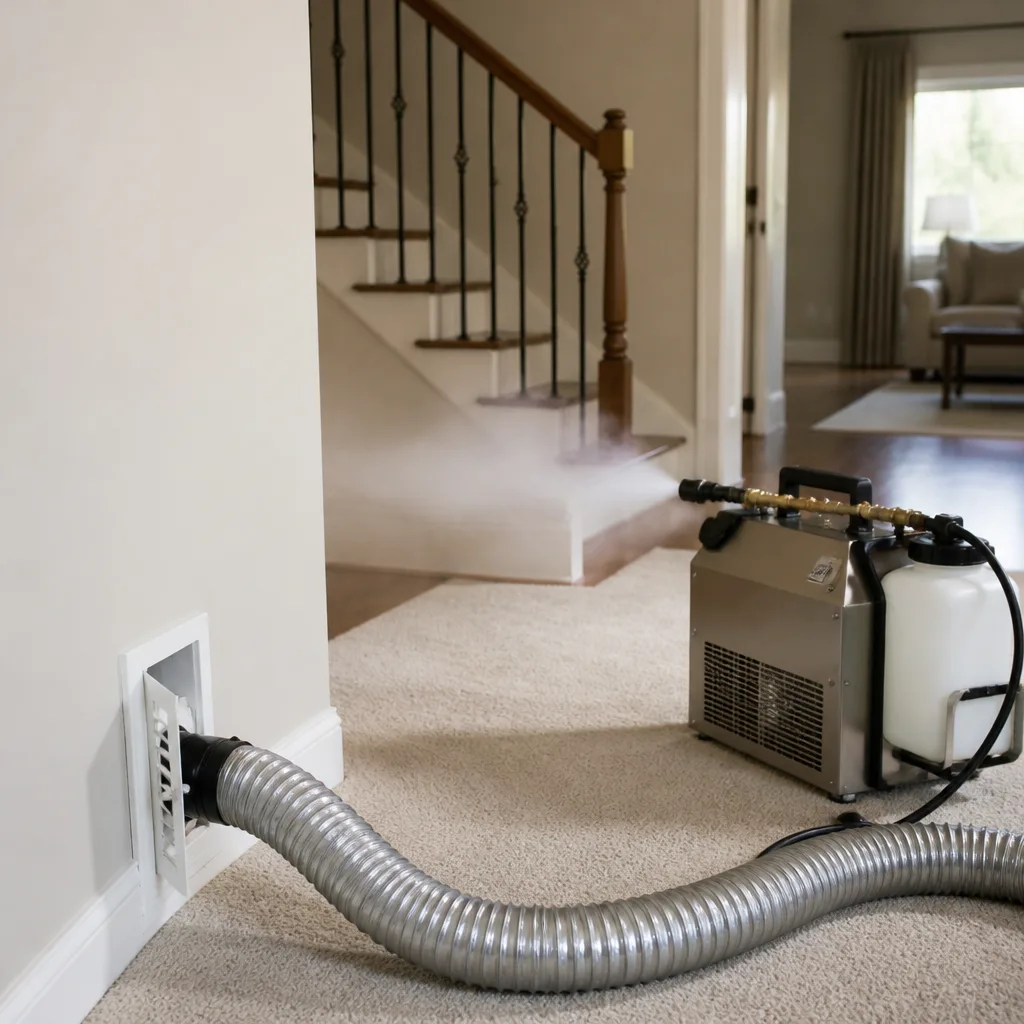 Sanitizing & deodorizing
Whole-system duct and dryer vent check with before-and-after photos - you see exactly what came out of your vents
That "$99 whole-house special" is a bait ad - the real number appears once they are in your hallway, or the "clean" is a shop-vac at the register. We photograph the inside of your ducts before and after instead.
Air Duct Cleaning Warning Signs: A Wakefield Homeowner’s Reference Guide
Most duct problems in Wakefield don’t announce themselves with a bang. They hide as something else. The bedroom that never quite cools is blamed on the thermostat. The musty smell in the hallway gets blamed on the basement. The spring allergy flare-up gets blamed on pollen. So the thermostat gets replaced, the basement gets a dehumidifier, and the allergy medicine gets stronger, all while the actual source sits undisturbed in the ductwork above the ceiling. This guide is about pattern recognition, not panic. By the end, you’ll know how to test your own system room by room, how to read what a smell is telling you, and how to tell a duct problem apart from a dozen look-alikes. We’ve built it for Wakefield homeowners and property managers who’d rather diagnose than guess.
Quick Answer
The main warning signs of a duct problem in Wakefield are uneven room temperatures (one room running 5 degrees or more off from the rest), musty or burning odors that appear when the HVAC runs, visible dust streaking at the registers, and allergy symptoms that flare up specifically when the system is on. These point to contaminated or damaged ductwork rather than a thermostat issue. Cleaning, sealing, or repair is the fix, and a professional inspection is the place to start.
Styles & brands we work with
- Whole-home duct cleaning
- Dryer vent cleaning
- Camera inspection
- Sanitizing & deodorizing
Table of Contents
- Airflow Asymmetry: The Room-to-Room Test
- Reading Your Home’s Smells: Musty, Burning, or Chemical
- Visible Debris at Registers vs. Invisible Contamination Upstream
- Health Symptom Patterns That Point to Ducts
- Signs You Need Repair, Not Just Cleaning
- Dryer Vent Warning Signs Wakefield Homeowners Overlook
- A 10-Minute Diagnostic Walkthrough for Your Home
- When to Call a Professional
Airflow Asymmetry: The Room-to-Room Test
If two rooms in your home consistently run 5 or more degrees warmer than the rest, the most likely cause is not your thermostat or your windows. It’s a blockage, leak, or disconnection somewhere in the supply branch feeding those rooms, and no amount of thermostat adjustment will fix it. Wakefield homes, especially the older capes and colonials in neighborhoods like Greenwood Park and the Lakeview area, tend to have long duct runs that were sized decades ago for a different furnace and a different set of rooms.
How to run the test
- Close every window and exterior door. Turn off the system and let the house settle for 30 minutes with the thermostat set to its normal daytime temperature.
- Place a thermometer on a stand (not against a wall) in your coldest room and another in your warmest room. Note both readings.
- Turn the system on and let it run for 20 to 30 minutes. Note both readings again.
- Repeat on a second day. Consistency matters more than any single measurement.
If the gap exceeds 5 degrees on both days, that’s your signal. A gap of 8 to 12 degrees is a strong indicator of a disconnected flex run or a badly crushed section, not just a minor balancing issue.
What the results actually mean
- One room 5 to 8 degrees off: Often a partially closed damper, a kinked flex run, or a supply register blocked by furniture. Cleaning and a balancing correction usually resolves it.
- One room 8 to 12 degrees off: Usually a disconnection, a collapsed inner liner, or a branch that has been leaking into a wall cavity for a long time.
- Two or three rooms all off by the same amount: Points to a trunk-line restriction rather than a single branch.
- Every room warm, none extreme: This is more likely a return-air problem. The system can’t get enough air back to push air out.
This test costs you nothing and tells you more than a thermostat replacement ever will. Our technicians have up to 12 years of experience with exactly these patterns, and when we run air duct cleaning on a Wakefield home, the first thing we do is confirm which branch is starving before we touch a tool.
Reading Your Home’s Smells: Musty, Burning, or Chemical
Not every smell in your duct system means the same thing, and treating them as interchangeable wastes money. The type of odor tells you almost as much as the location does. Here’s the classification we use.
Musty odors
Musty smells are the most common and usually point to microbial growth in the duct system. This happens when moisture sits on interior duct surfaces, often from condensation near a coil, a disconnected run in a humid basement or crawlspace, or a wet filter left in too long. The smell tends to intensify when the system first kicks on and fade after 20 or 30 minutes. Urgency: moderate. Not a fire risk, but it means biological material is present and the system is distributing spores with every cycle.
Burning odors
A burning smell is a different category. When a burning odor appears on startup and fades quickly, it often comes from accumulated debris sitting on the heat exchanger burning off when the burners fire. That’s low-urgency if it’s mild and diminishing, but if the smell returns every cycle or gets stronger, stop using the system until it’s inspected. Burning debris on a heat exchanger means the component itself may be compromised, and that’s a safety conversation, not a cleaning conversation.
Chemical or plastic odors
A sharp, plastic-like or chemical smell often points to off-gassing from degraded duct lining, especially on older flexible ductwork whose inner surface has broken down. This is a repair-or-replace situation, not a cleaning situation. If a cleaning contractor tries to treat a chemical off-gassing problem with a deodorizer spray, walk away and find someone who will look at the duct material itself.
Across all three types, the reliable pattern is this: if the smell appears when the system runs and fades when it sits idle, the source is inside the pathway. Clean outside air doesn’t come and go with the thermostat.
Visible Debris at Registers vs. Invisible Contamination Upstream
Dust at a return register is a lagging indicator. By the time you can see it, contamination has usually been building upstream for months or years. This is the single biggest reason caution is warranted when a homeowner says, “But my registers look fine.” Registers are the last place the air touches before it enters your room, and they’re the only part of the duct system you can see without a camera. Everything meaningful happens upstream.
What register dust actually tells you
- Uniform light dust on the grille face: Normal. Every ducted home in Wakefield sees this.
- Dark streaking or soot-like deposits around the edges of the vent: Leaking air is drawing dust past the grille from gaps in the drywall or the boot. The leak is the problem.
- Visible buildup inside the register when you shine a light into the vent: This means the boot or the run behind it has significant accumulation. The supply branch needs attention.
- Fuzzy or fibrous material visible inside: Likely liner breakdown or filter bypass. Escalate to repair, not just cleaning.
The leading indicators upstream
The things worth watching for before you ever see dirt at a register:
- Filter behavior. A filter that clogs in three weeks instead of three months is telling you debris is passing into the return plenum faster than it should.
- Air quality changes. More frequent dusting, a haze in sunlight, or dusty surfaces near the returns point to contamination upstream.
- Coil performance. A dirty evaporator coil is a symptom of a dirty return path. If you’ve had the coil cleaned and it looks dirty again quickly, look at the ductwork.
- Blower wheel condition. When a technician opens the air handler and finds the blower wheel caked with debris, the return ducts have been feeding it that debris for years.
What this means practically: don’t use register appearance alone to decide whether to schedule a service. Use system behavior, then let an inspection confirm. We use Rotobrush contact-cleaning alongside Nikro and Abatement Technologies HEPA extraction because the equipment lets us verify what’s actually upstream, not just vacuum the surface of a grille and call it a day.
Health Symptom Patterns That Point to Ducts
Health symptoms from indoor air quality are often confused with weather, seasons, or unrelated allergies. But duct-related symptoms follow a specific pattern you can learn to recognize. The three markers to watch are timing, location, and population.
Timing: symptoms worse when the HVAC is running
If a runny nose, scratchy throat, headaches, or sinus pressure start within an hour of the system kicking on and ease when the system is off, that correlation matters. March in Wakefield brings rapid temperature swings that keep furnaces and heat pumps cycling on and off all day, so the correlation is easy to spot in spring. Watch a single day and note when symptoms begin. If the system isn’t running and symptoms aren’t appearing, the pathway is a likely suspect.
Location: consistent room correlation
Allergy symptoms that cluster in one room or on one floor, especially one with the warmest temperature reading from the test earlier in this guide, point to that branch. A poorly sealed or contaminated branch in the same room a person sleeps in will produce symptoms that match the space rather than the season.
Population: sensitive occupants and pets first
One of the most useful diagnostic clues is who is reacting. In our experience across Wakefield homes, pets, infants, people with asthma, and anyone with known environmental sensitivities usually show symptoms weeks before the average adult notices anything. If the household dog is scratching more than usual, the cat is sneezing, or the toddler is wheezing at night, look at the ducts before you look at the calendar.
- Pattern likely duct-related: symptoms worse when the system runs, tied to one or two rooms, and worse in pets and sensitive occupants.
- Pattern likely not duct-related: symptoms that track the outdoor pollen count, appear equally in all rooms, or show no correlation with system operation.
A duct inspection is not a medical diagnosis. But when the pattern lines up, an inspection is the right next step, and cleaning plus a filtering upgrade like a Honeywell or Aprilaire system often changes the pattern noticeably. If anyone in the household has serious respiratory conditions, consult your doctor first; then get the ducts evaluated.
Signs You Need Repair, Not Just Cleaning
Some warning signs cross a threshold where cleaning alone won’t fix the problem. Recognizing them saves you from paying for a cleaning that can’t resolve the underlying issue. Three categories to watch for:
Visible mold at registers or inside the boot
If you see dark speckled growth on the grille face, on the ceiling around the vent, or on the inside of the boot when you shine a light in, this is beyond cleaning. Mold growth on interior surfaces means moisture is present and the material has been colonized. The escalation path is inspection, moisture source correction, and in many cases sectional cleaning with an EPA-conscious sanitizing treatment to follow. We treat this as a distinct service under Air Quality & Sanitizing, using Guardsman-line treatments after the source is addressed, because spraying a surface that still has an active moisture problem doesn’t solve anything.
Pest activity inside the ductwork
Scratching, skittering, or rustling sounds from a duct run, especially at night or early morning, usually means animals have gotten into the system, often through a disconnected run in an attic or a crawlspace. This is common in Wakefield homes that have older exterior terminations or flexible runs in unfinished spaces. The escalation path is: locate the breach, seal it, remove the animal activity, then clean and disinfect the affected sections. Cleaning without sealing guarantees a repeat. Our HVAC cleaning scope covers the system from intake to output so a breach doesn’t get missed.
Collapsed or damaged flex duct
Flex duct that has collapsed, kinked, or lost its inner liner will not recover from cleaning. When we find collapsed runs, we repair or replace them, which is why Wakefield Air Duct Cleaning offers Duct Repair & Sealing as a core service rather than subcontracting it out. The same visit that identifies the problem fixes it.
Leaking joints and disconnected runs
Seams that have separated, boots pulled away from drywall, or duct tape that has dried out and peeled back are common in any home over a couple of decades old. A leak means conditioned air is being lost into the structure and unfiltered air is being drawn back in. This is a sealing repair, done in the same visit as cleaning.
Dryer Vent Warning Signs Wakefield Homeowners Overlook
Dryer vent clogs are the one warning sign in this guide that’s a fire risk rather than an air quality issue. Lint buildup in a dryer vent is a leading cause of residential fires, and it’s the single most preventable hazard in a home’s air pathway. We treat dryer vent cleaning as a safety service, not a convenience add-on.
Signs your dryer vent needs attention:
- Clothes take two cycles to dry when they used to dry in one.
- The dryer or the wall behind it feels hot to the touch during a cycle.
- A burning or scorched smell in the laundry area.
- Lint visible around the exterior vent flap, or the flap doesn’t open fully.
- Excess lint in the lint trap after every load, more than usual.
- The vent run is long, has multiple bends, or terminates on an upper floor or through a roof.
Any one of these is worth a call. Combined, they’re a strong signal to stop using the dryer until the vent is checked. Wakefield homes with laundry rooms on upper floors or in converted basements often have long, tortuous vent runs that clog faster than a straight run to an exterior wall.
A 10-Minute Diagnostic Walkthrough for Your Home
If you want a single procedure to run through once a season, this is it. Ten minutes, a flashlight, and a thermometer get you most of the way to knowing whether your Wakefield home needs service.
- Walk every room with the system running. Stand under each supply register and feel the airflow with your hand. Note which registers feel weak or produce no air at all.
- Smell at each return register. Cup your hands around the grille and take a note of what you smell: nothing, musty, dusty, chemical. Any smell beyond “nothing” is worth following up.
- Run the room-to-room temperature test described earlier. Record the readings on two different days.
- Shine a light into two or three supply registers. Look for debris inside the boot, dark growth on the surfaces, or a liner that has pulled away.
- Check the filter. Note how long it’s been in and what it looks like. Anything that’s clogged faster than expected is a flag.
- Open the air handler cabinet (only if it’s safely accessible). Look at the blower wheel through the inspection port; if it appears visibly dirty, that points to a dirty return.
- Listen. After the system shuts off, listen for a minute near a few registers. Any scratching, ticking, or rattle from inside a duct that isn’t coming from equipment is worth noting.
- Check the dryer vent flap outside. Run the dryer and confirm the flap opens fully and lint is being expelled.
Note what you find and keep it as a baseline. Patterns across two or three seasonal checks are far more diagnostic than a single observation. If you’d rather have a professional run through it, that’s what the estimate is for.
See the difference
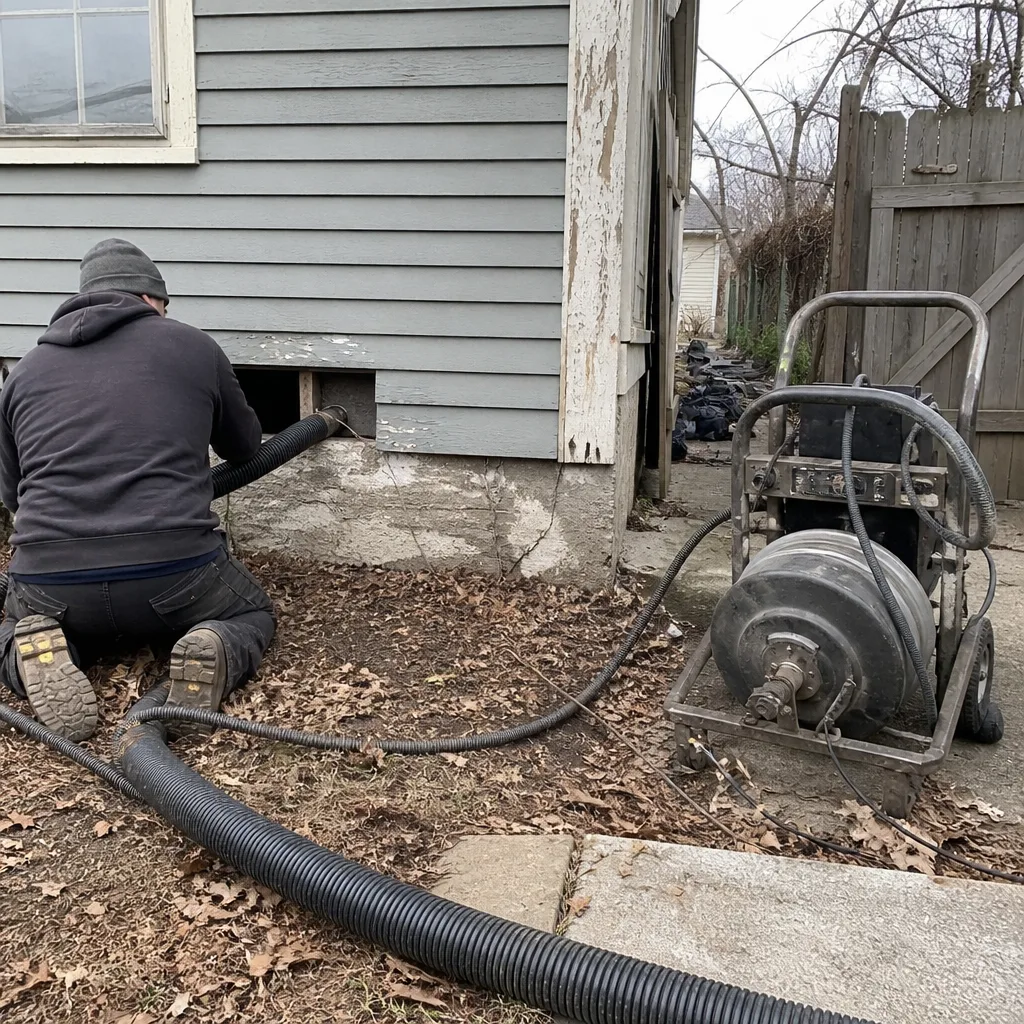 Before
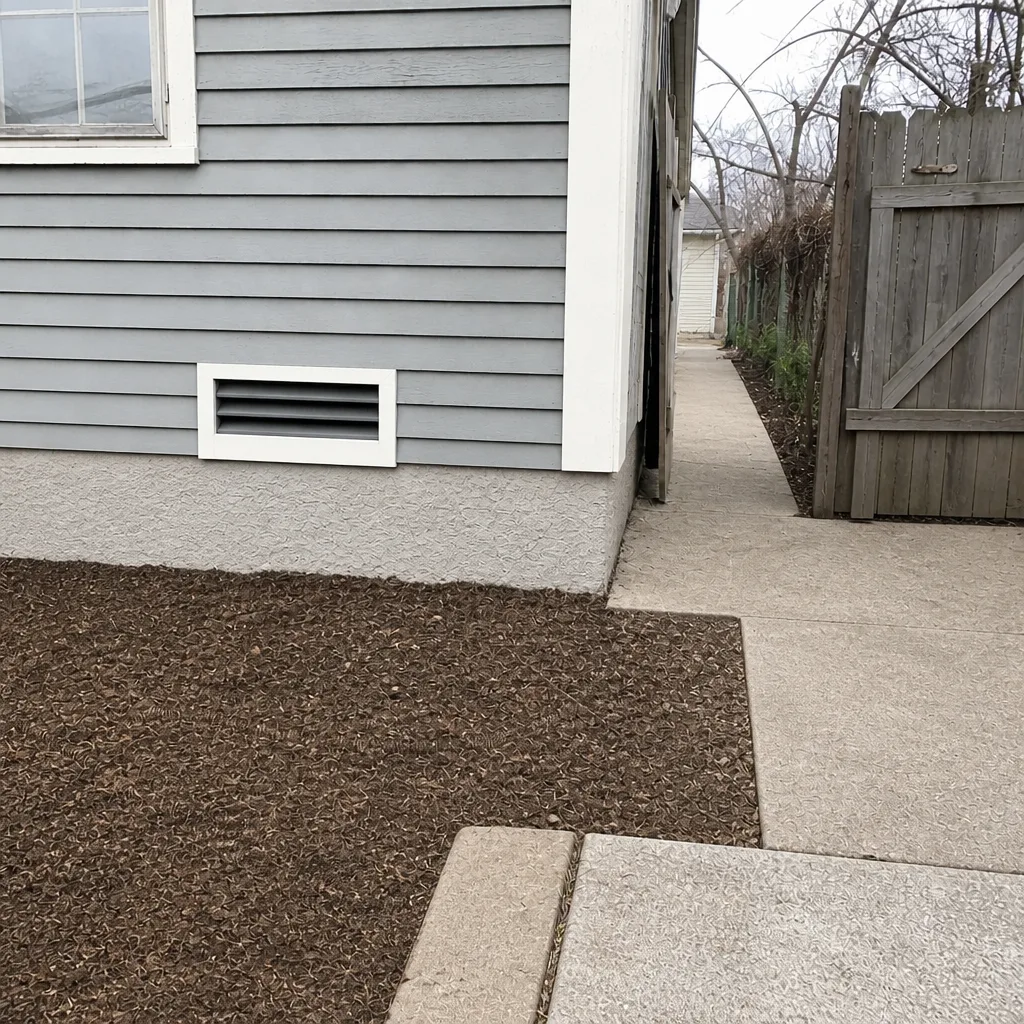 After
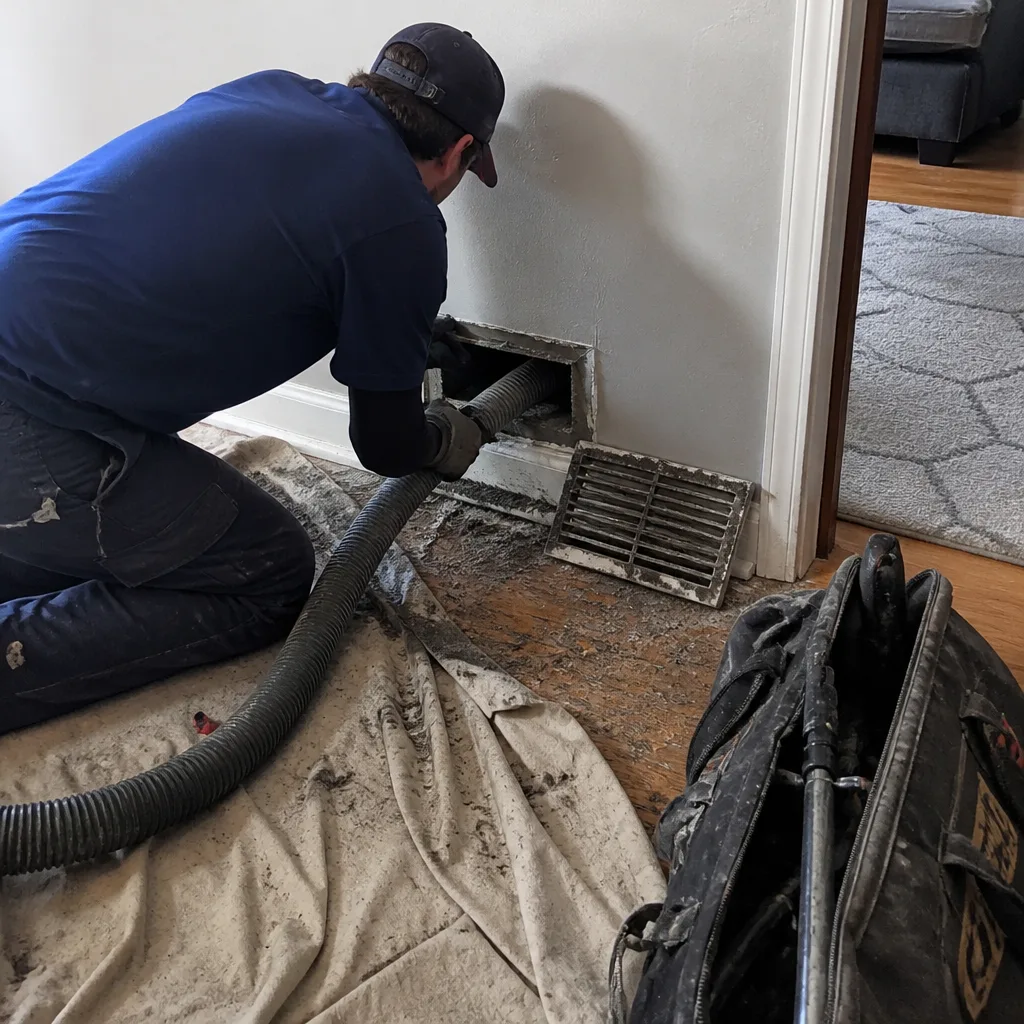 Before
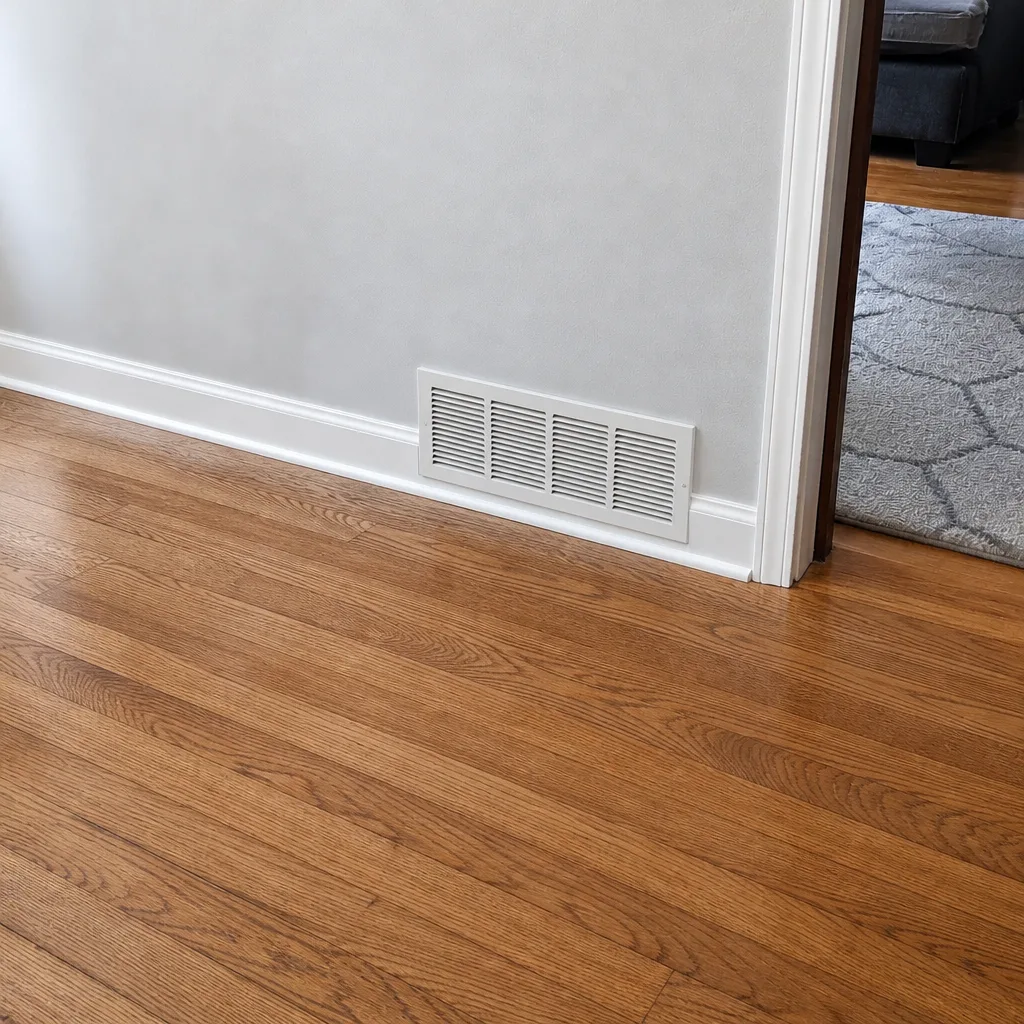 After
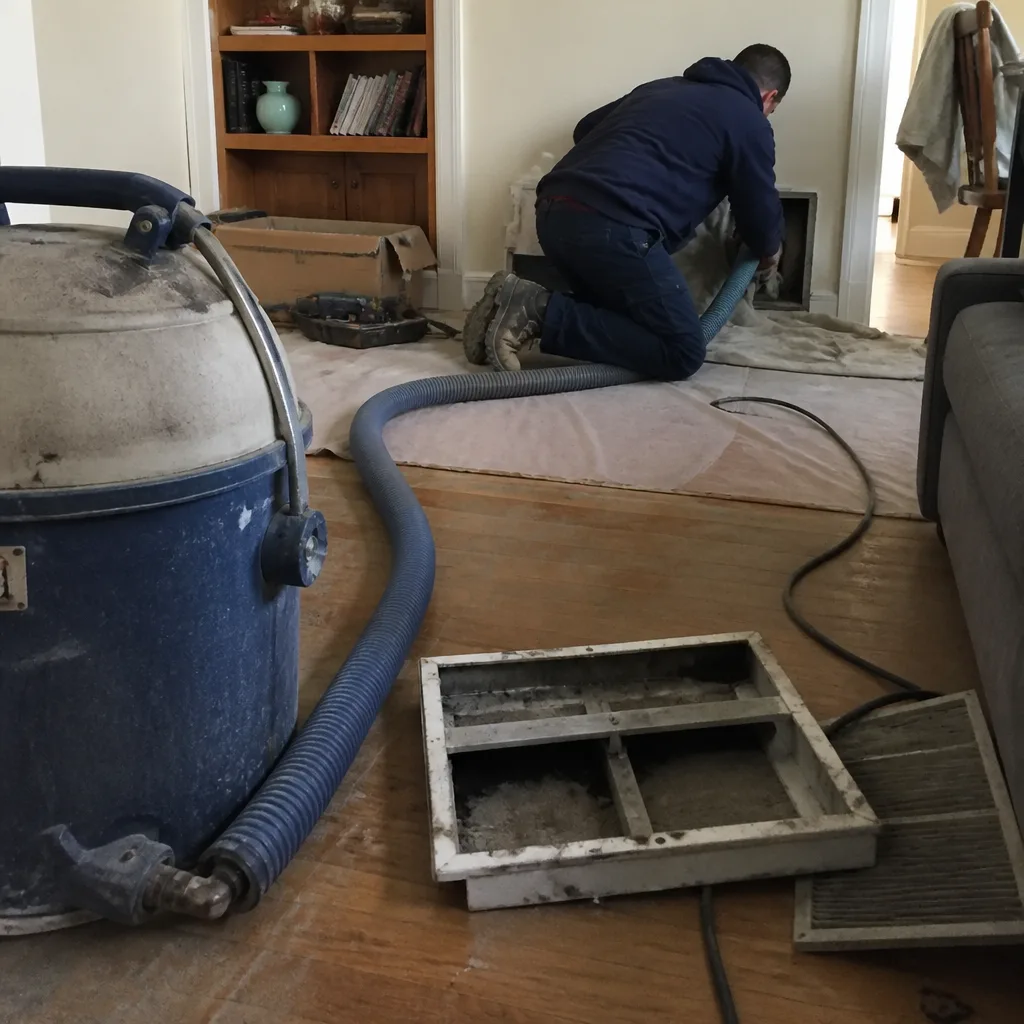 Before
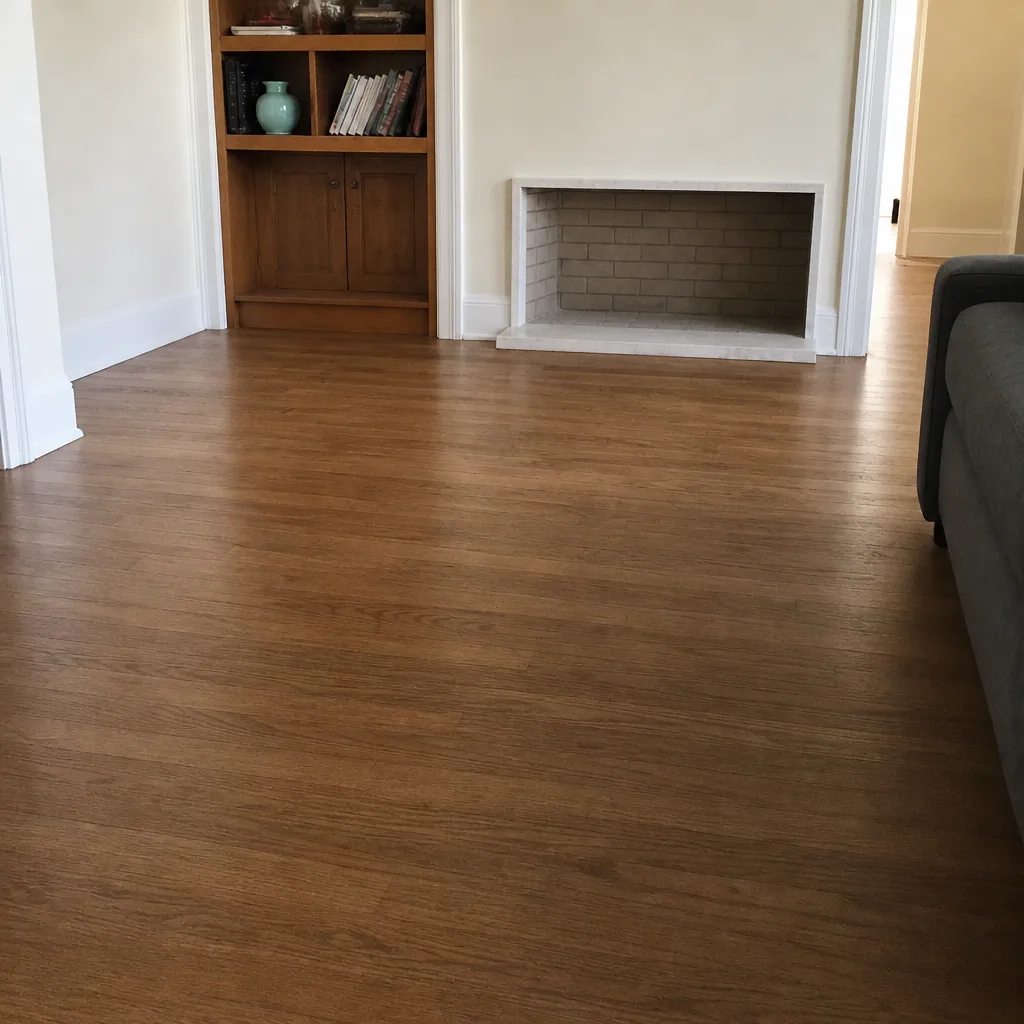 After
Common Mistakes to Avoid
- Blaming the thermostat first. A thermostat shows the temperature at the wall it’s mounted on, not in the rooms you’re actually using. Replace the thermostat only after you’ve confirmed the duct branches are delivering air properly.
- Trusting coupon-mailer pricing. A very low headline price for “whole-house duct cleaning” in Wakefield usually means a surface skim with a shop-vac and a pushy upsell once the technician is on site. Ask what equipment is used and what “whole system” means in writing.
- Assuming register dust is the whole story. Registers are the last stop in the pathway. Clean registers over contaminated trunks just hide the actual problem.
- Cleaning without repair. If a run is disconnected, no amount of cleaning fixes the leak. Clean, seal, and repair in the same visit or the problem returns.
- Forgetting the dryer vent entirely. Many duct cleaning contractors treat dryer vents as an afterthought or skip them unless pushed. It’s the fire-risk part of the system; schedule it explicitly.
- Treating a burning smell as a cleaning problem. Odors on startup that don’t fade, or that intensify, are heat-exchanger territory. Get the system inspected before you have anyone clean anything.
- Sanitizing an active moisture problem. A treatment sprayed on a surface that still has water intrusion won’t hold. Fix the moisture source first.
When to Call a Professional
Call a professional if any of these are true: a room runs 5 or more degrees off from the rest of the house on two separate checks; a musty, burning, or chemical odor appears specifically when the HVAC is running; the blower wheel or evaporator coil keeps dirtying quickly after cleaning; pets or sensitive occupants show symptoms that correlate with system operation; a dryer vent hasn’t been cleaned and the dryer run is long or complicated; visible mold is present at a register or inside a boot; or you hear scratching from inside the ductwork.
Some of these are cleaning calls, some are repair-or-seal calls, and some are “shut the system down and schedule an inspection now” calls. The pattern tells you which one you’re dealing with.
Wakefield Air Duct Cleaning offers free estimates in Wakefield. Call (844) 902-2536. We answer 24/7. Fast dispatch from 7am to 7pm, Sunday through Friday.
Frequently Asked Questions
You know because of a pattern, not a single symptom. Uneven room temperatures, odors tied to system operation, and health symptoms that flare when the HVAC is running and fade when it’s off are the three strongest indicators. Visible register dust is a useful clue but not sufficient on its own. Call (844) 902-2536 for a free estimate and we’ll inspect and confirm before any work starts.
It can if the pattern points to ducts. If symptoms flare when the HVAC runs, cluster in specific rooms, or are worst in pets and sensitive occupants, cleaning often changes the pattern. If symptoms track the outdoor pollen count and appear evenly everywhere, cleaning won’t fix that. Call (844) 902-2536 for a free estimate so we can check which pattern applies in your home.
Cleaning if the ducts are dirty but intact, repair if there’s a leak, a collapsed run, mold, or pest intrusion. The threshold signs are visible mold at a register, visible collapse or kinking in a flexible run, and any scratching or animal noise inside the ducts; all three mean repair first. Call (844) 902-2536 for a free estimate and we’ll check the system before any scope of work is agreed.
Almost certainly. A dryer that suddenly needs two cycles, or that feels hot behind the drum, or that shows excess lint around the exterior flap is telling you the vent is restricted. Lint-clogged vents are a leading cause of residential fires, so stop using the dryer until it’s checked. Call (844) 902-2536 for a free estimate and we’ll clean the vent and confirm the run is clear.
Most homes need it every few years, not annually, unless a specific trigger applies: recent renovation, water intrusion, pest activity, pets in the home, or a family member with significant respiratory sensitivity. If any of those apply, a shorter interval makes sense. Call (844) 902-2536 for a free estimate and we’ll give you an honest interval for your home, not a maintenance prescription.
Equipment, scope, and what happens after cleaning. A professional scope uses contact-cleaning (Rotobrush rotary systems) and HEPA extraction (Nikro, Abatement Technologies), and includes the entire system from return through supply and air handler. A cheap quote often means a shop-vac on the register face and an upsell for what should have been included. Call (844) 902-2536 for a free estimate written against an actual inspection.
The Bottom Line
Duct problems in Wakefield are rarely obvious. They hide behind thermostat complaints, seasonal allergies, and the assumption that dusty registers are the only thing worth watching. The reliable path is to test rather than guess: run the room-to-room temperature check, watch how your system behaves operationally, read your home’s smells by category, and note who in the household reacts first. When those patterns point to the duct system, an inspection settles it. Cleaning, sealing, repairing, and sanitizing are different services for different problems, and the right response depends on which one you’re actually facing. If you’d rather have a professional confirm the diagnosis than work it out alone, we’re a phone call away.
Call (844) 902-2536 for a free estimate. We answer 24/7. Fast dispatch from 7am to 7pm, Sunday through Friday.
Written by the team at Wakefield Air Duct Cleaning.